How Much Does White Label Web Development Cost in 2026?
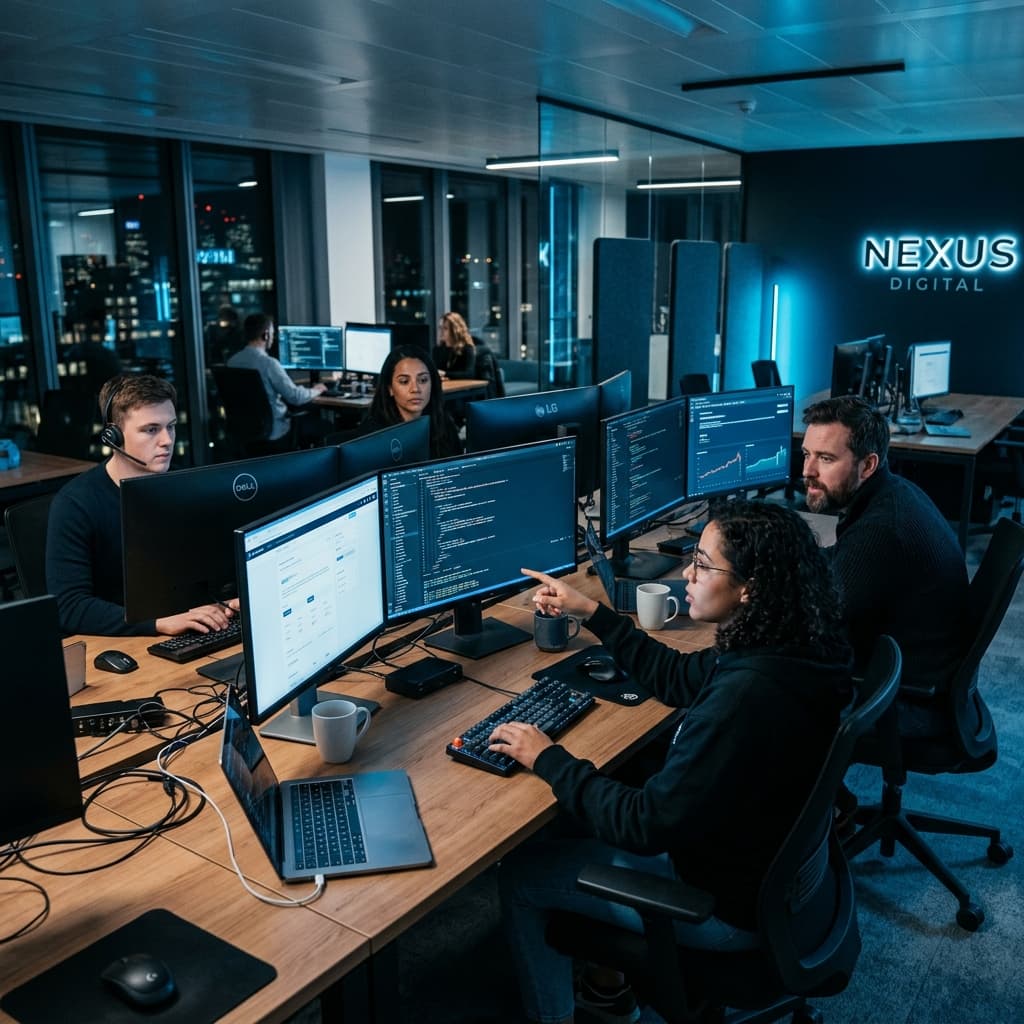
If you run a web design or digital marketing agency, you've probably faced this situation.
A client wants a new website. Your agency can manage the design, communication and project delivery, but you need a development team to build it.
Before you send the client a quotation, you need to know what outsourcing the development will cost.
The challenge is that white label web development doesn't have one standard price.
A five-page WordPress website, a custom Shopify store and a web application may all require very different amounts of work.
In this guide, we'll explain how white label development pricing works in 2026, what affects the cost, how different outsourcing arrangements compare and how agencies can calculate their project margins.
What Is White Label Web Development?
White label web development is an arrangement where one company completes website development work for another agency, which delivers the project to its own client.
For example, a branding agency may design a website in Figma and outsource the development to a technical partner.
The agency manages its client relationship, handles approvals and remains responsible for the commercial agreement.
The development partner completes the agreed technical work.
Agencies use this approach when they need additional capacity, specialist development skills or help delivering projects without hiring permanent employees for every requirement.
White label development can include WordPress, Shopify, WooCommerce, custom websites, frontend development, backend development and web applications. You can also learn how our white label process works for client projects.
How Much Does White Label Web Development Cost?
The cost depends on the project scope, platform, functionality, design requirements and development arrangement.
There is no universal price that applies to every website.
A project with approved designs, reusable templates and standard functionality may require less work than one involving custom features, integrations or complex content migration.
To understand the likely cost, agencies should first identify the work that the development partner will actually complete.
Illustrative Project Budgets
The following figures are hypothetical planning examples, not verified 2026 market averages or WhiteLabelAgency.org's service rates.
| Project type | Example outsourced development budget |
|---|---|
| Small WordPress business website | £500–£1,500 |
| Custom WordPress marketing website | £1,500–£4,000 |
| Shopify storefront development | £1,000–£4,000 |
| WooCommerce website development | £1,200–£4,500 |
| Custom website with integrations | £2,500–£8,000+ |
| Custom web application | Quoted after requirements review |
These ranges are only examples to illustrate how budgets can differ. Actual supplier quotes may fall outside them, depending on location, complexity, delivery standards and other factors.
Agencies should request a quote based on their own project requirements rather than treating a general pricing table as a fixed rate card.
What Affects White Label Development Pricing?
Several factors determine how much development work is required.
1. Website Platform
Different website platforms involve different development approaches.
A WordPress website may use custom themes, templates and plugins. Shopify projects may involve theme development, storefront customisation and ecommerce integrations.
Custom websites built with React, Next.js or other frameworks may require additional frontend and backend development.
The platform alone doesn't determine the price, but it influences the type of work involved.
2. Number of Unique Page Templates
A website with 20 pages doesn't necessarily require twice as much development as a website with 10 pages.
If many pages use the same reusable layout, the development effort may be relatively manageable.
However, a smaller website with several complex, individually designed page templates may require more work.
When requesting a quote, agencies should identify both the total number of pages and the number of unique layouts.
3. Design Readiness
Approved Figma designs can help define the development scope.
If the designs are incomplete or responsive behaviour hasn't been decided, the development partner may need additional clarification before quoting accurately.
Agencies should explain whether the work involves development only or includes design decisions.
4. Custom Functionality
Features such as booking systems, customer portals, user accounts, advanced forms or custom dashboards can increase development effort.
The quotation should identify the required functionality and any dependencies.
5. Third-Party Integrations
Connecting a website with a CRM, payment provider, inventory system or external application may require additional technical work.
Integration costs depend on the available APIs, authentication requirements and complexity of the workflow.
6. Content and Data Migration
Moving existing pages, blog posts, products or other data can add work to a redesign or platform migration.
URL mapping and redirect implementation may also be necessary when the website structure changes.
7. Testing and Quality Assurance
Responsive testing, browser checks, functional testing and integration testing all require time.
The agreed testing scope should be reflected in the quotation.
8. Delivery Timeline
A project with a short deadline may require different resource planning from one with a flexible schedule.
Agencies should discuss deadlines before accepting a quotation.
White Label Web Development Pricing Models
Different outsourcing arrangements suit different types of agencies and client projects.
Fixed-Price Development
A fixed-price arrangement works best when the project has clearly defined requirements.
For example, your agency may have approved Figma designs, a confirmed page list and a documented set of features.
The development partner reviews the scope and provides a quotation for the agreed deliverables.
Advantages:
- Easier to budget for individual projects
- Clearer commercial expectations
- Suitable for well-defined website builds
Considerations:
- Scope changes may require additional quotations
- Unclear requirements can lead to disputes
- Revisions and acceptance criteria should be defined
Hourly Development
Under an hourly arrangement, the agency pays for development time.
This can be useful for tasks that are difficult to estimate precisely or where requirements may change.
Advantages:
- Flexible for evolving requirements
- Suitable for troubleshooting and improvements
- Can work for smaller technical tasks
Considerations:
- Final costs may be less predictable
- Time tracking and reporting are important
- Agencies need to manage the approved budget
Monthly Development Support
Some agencies need regular development help across multiple client websites.
A monthly arrangement may provide access to agreed development capacity or services.
Advantages:
- Suitable for recurring workloads
- Easier to plan ongoing delivery
- Can reduce repeated supplier selection
Considerations:
- Included work must be defined
- Unused capacity may affect value
- Response times and availability should be agreed
Dedicated Developers
A dedicated development support arrangement may suit agencies with consistent technical requirements.
The agency typically agrees on a resource allocation, required skills and engagement period.
Advantages:
- More consistent development capacity
- Suitable for longer-term projects
- Can support an existing agency team
Considerations:
- Requires ongoing workload planning
- Management responsibilities must be clear
- Capacity and availability depend on the agreement
White Label WordPress Development Costs
White Label WordPress Development is commonly used for business websites, content-managed websites and ecommerce projects.
Development costs depend on how the website is built.
A standard business website with reusable layouts may have a relatively straightforward development scope.
A custom WordPress website with complex content structures, integrations or bespoke functionality may require considerably more work.
Before requesting a WordPress quotation, agencies should clarify:
- Number of unique templates
- Whether designs are approved
- CMS editing requirements
- Custom functionality
- Required plugins and integrations
- Content migration
- Testing and launch responsibilities
The more complete the brief, the easier it is to compare supplier quotations.
White Label Shopify Development Costs
White Label Shopify Development costs depend on the storefront design and ecommerce functionality.
A project using an existing theme may differ substantially from one requiring extensive customisation.
Agencies should consider:
- Theme setup or customisation
- Homepage and product page layouts
- Collection templates
- Navigation requirements
- Shopify app integrations
- Product data migration
- Custom functionality
- Testing and launch requirements
Third-party app subscriptions and Shopify platform fees should be considered separately from development unless explicitly included.
How Agencies Calculate Their Profit Margins
When outsourcing development, the supplier's price is not the agency's only project cost.
Your agency may also spend money and time on sales, design, project management, client communication, testing and revisions.
Consider this hypothetical example.
| Item | Amount |
|---|---|
| Price charged to client | £4,000 |
| Outsourced development cost | £1,500 |
| Design and project management | £700 |
| Other direct project expenses | £200 |
| Remaining project contribution | £1,600 |
The remaining contribution is £1,600.
To calculate the contribution margin:
Contribution margin = (Client price − Direct project costs) ÷ Client price × 100
In this example:
(£4,000 − £2,400) ÷ £4,000 × 100 = 40%
That 40% is not necessarily the agency's final net profit.
The business may still need to cover salaries, marketing, software subscriptions, administration, taxes and other overheads.
The purpose of the calculation is to help agencies understand whether their project pricing leaves sufficient room for their operating costs.
Is White Label Development Cheaper Than Hiring In-House?
There isn't one answer for every agency.
Hiring in-house developers may make sense when an agency has a steady volume of work and wants direct control over development resources.
Outsourcing may be more suitable when project volumes fluctuate or when different projects require different technologies.
In-House Development
Your agency may need to account for:
- Salaries
- Recruitment
- Equipment
- Software
- Training
- Management
- Employee availability
- Periods of lower workload
White Label Development
Your agency may need to account for:
- Supplier quotations
- Project management
- Quality review
- Communication
- Revisions
- Contract management
- Handover requirements
The right arrangement depends on the agency's workload, internal capabilities and business model.
How to Avoid Unexpected Development Costs
The cheapest quotation is not always the most suitable quotation.
An incomplete scope can lead to additional work, delayed delivery or disagreement about what was included.
Before approving a project, confirm the following.
Agree on Deliverables
Define the pages, templates, functionality and integrations included.
Clarify Design Responsibilities
Confirm whether the development partner is working from approved designs or making design decisions.
Define Revisions
Agree on how feedback will be handled and what counts as a change in scope.
Identify Third-Party Costs
Separate hosting, software subscriptions, plugins and other external costs.
Agree on Testing
Define the supported devices, browsers and functionality to be tested.
Confirm Handover
Specify the required code, files, documentation and access.
Discuss Post-Launch Work
Clarify whether future changes and support are included or quoted separately.
These steps make it easier for agencies to compare proposals and manage client expectations.
How to Choose a White Label Development Partner
Price matters, but it should not be the only consideration.
An agency also needs to understand how a development partner handles communication, requirements, testing and delivery.
Before choosing a supplier, consider asking:
- Have you worked with agencies on similar projects?
- Which platforms and technologies do you support?
- How do you review project requirements?
- What is included in your quotation?
- How do you manage revisions and scope changes?
- How is project progress communicated?
- Can confidentiality requirements be agreed?
- What testing is included?
- What happens at project handover?
- How are issues handled after launch?
Clear answers can help agencies choose an arrangement that fits their delivery process.
How to Get a White Label Development Quote
If your agency is planning to outsource a client website, prepare a short project brief before contacting suppliers.
Include:
- Your agency website
- Client project type
- Preferred development platform
- Number of pages or templates
- Figma designs or website references
- Required functionality
- Integrations
- Content or data migration
- Expected timeline
- Budget range, if available
You don't need to have every technical detail finalised, but a clear starting brief makes the discussion more productive.
Frequently Asked Questions
What is the average cost of white label web development?
There is no single reliable average that applies across all platforms, project sizes and supplier markets. Costs should be compared using similar project scopes and verified quotations.
Is white label WordPress development cheaper than custom development?
It can be for some projects, particularly where reusable WordPress functionality meets the requirements. Complex WordPress projects can still require substantial custom development.
Can agencies outsource Shopify development?
Yes. Agencies can outsource Shopify theme customisation, storefront development, integrations and other agreed technical work.
Do white label development companies charge monthly fees?
Some providers offer monthly arrangements, while others use project-based or hourly pricing. The available models depend on the supplier.
Can I outsource development while keeping my agency's branding?
Yes. White label arrangements are designed to allow agencies to deliver work under their own brand, subject to the agreed contractual and operational terms.
Should agencies add a markup to outsourced development?
Agencies need to price projects to cover direct costs, internal work, overheads and their desired profit. The appropriate markup depends on the agency's responsibilities and business model.
Is outsourcing suitable for small agencies?
It can be suitable for agencies with occasional development needs, provided the project economics and supplier arrangement make sense.
How do I request an accurate development quotation?
Share approved designs, technical requirements, deliverables, integrations and the expected timeline wherever possible.
Looking for a White Label Development Partner?
If your agency has client website projects but needs additional development capacity, White Label Agency can review your requirements.
We provide white label development support for agencies working on WordPress, Shopify, WooCommerce, custom websites and software projects.
Whether you need a quotation for one website or want to discuss ongoing development support, share the project details.
Our services are intended for agencies and businesses outsourcing client development work, not freelancers looking for jobs or agencies seeking new clients.